The waste management initiative in Kragilan Village was prompted by a practical challenge faced by local residents: the village does not yet have a Temporary Waste Disposal Site (TPS). As a result, households have been managing their waste independently, often in ways that are less than ideal.
Responding to this situation, a group of Universitas Diponegoro students participating in the Community Service Program (Kuliah Kerja Nyata / KKN), Team 1 Sub-Team 94, introduced a community-based waste management initiative. The program included the construction of waste incinerators as well as the provision of trash bins specifically for plastic bottles and cups, aiming to reduce waste volume and maintain environmental cleanliness.
In this initiative, the students played an active role not only in technical implementation but also in educational outreach. The plastic bottle and cup bins were designed to help residents separate recyclable waste with economic value, which can later be sold to collectors. Meanwhile, the waste incinerators were agreed upon by the community as an alternative solution for managing household waste.
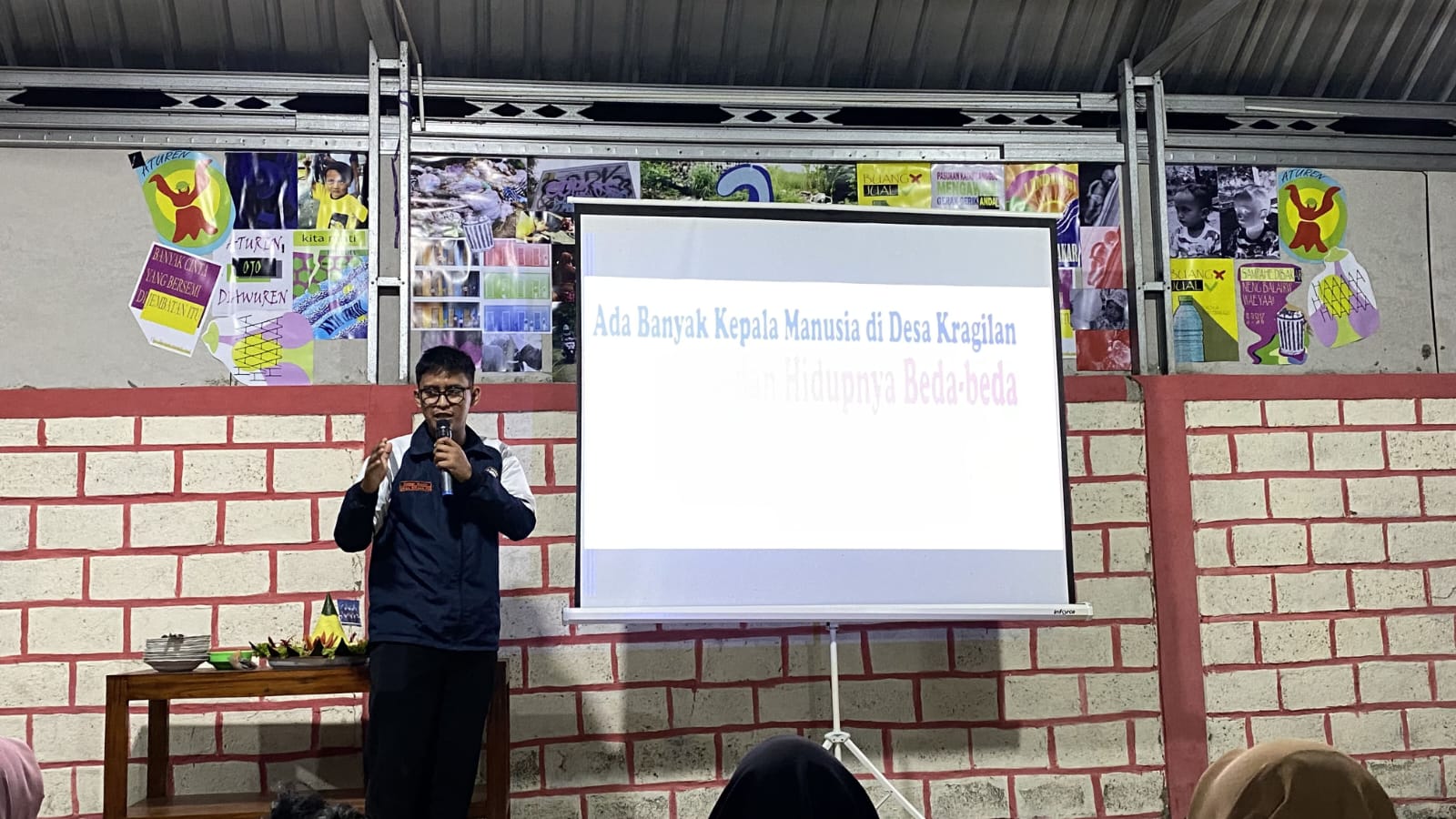
The main socialization activity was held on February 7, 2026, at the RW 3 community hall in Kragilan Hamlet. During the event, students delivered educational messages about proper waste disposal practices and installed informational posters in several strategic locations as visual reminders for residents.
In addition to posters, the program introduced a zine titled “Aturen, Ojo Diawuren” (“Rules, Don’t Be Careless”). The zine features short satirical stories and sharp social commentary on everyday waste-related behavior. This narrative approach was chosen to present environmental issues in a way that feels close to the daily experiences of the community.
One of the students involved, Damar Hisam, applied his background as an Indonesian Literature student by using language and storytelling as engaging tools for environmental education. This cultural approach complements the technical waste management efforts and is expected to help build collective awareness gradually and sustainably.
Overall, the activity demonstrates that a multidisciplinary approach, combining technical solutions with cultural and narrative strategies, can be an effective way to address environmental issues at the village level. The initiative also received positive support from the Head of the Indonesian Literature Study Program, Dr. Sukarjo Waluyo, S.S., M.Hum., who expressed hope that such activities would inspire more students to actively contribute to community-based social programs.
Damar Hisyam