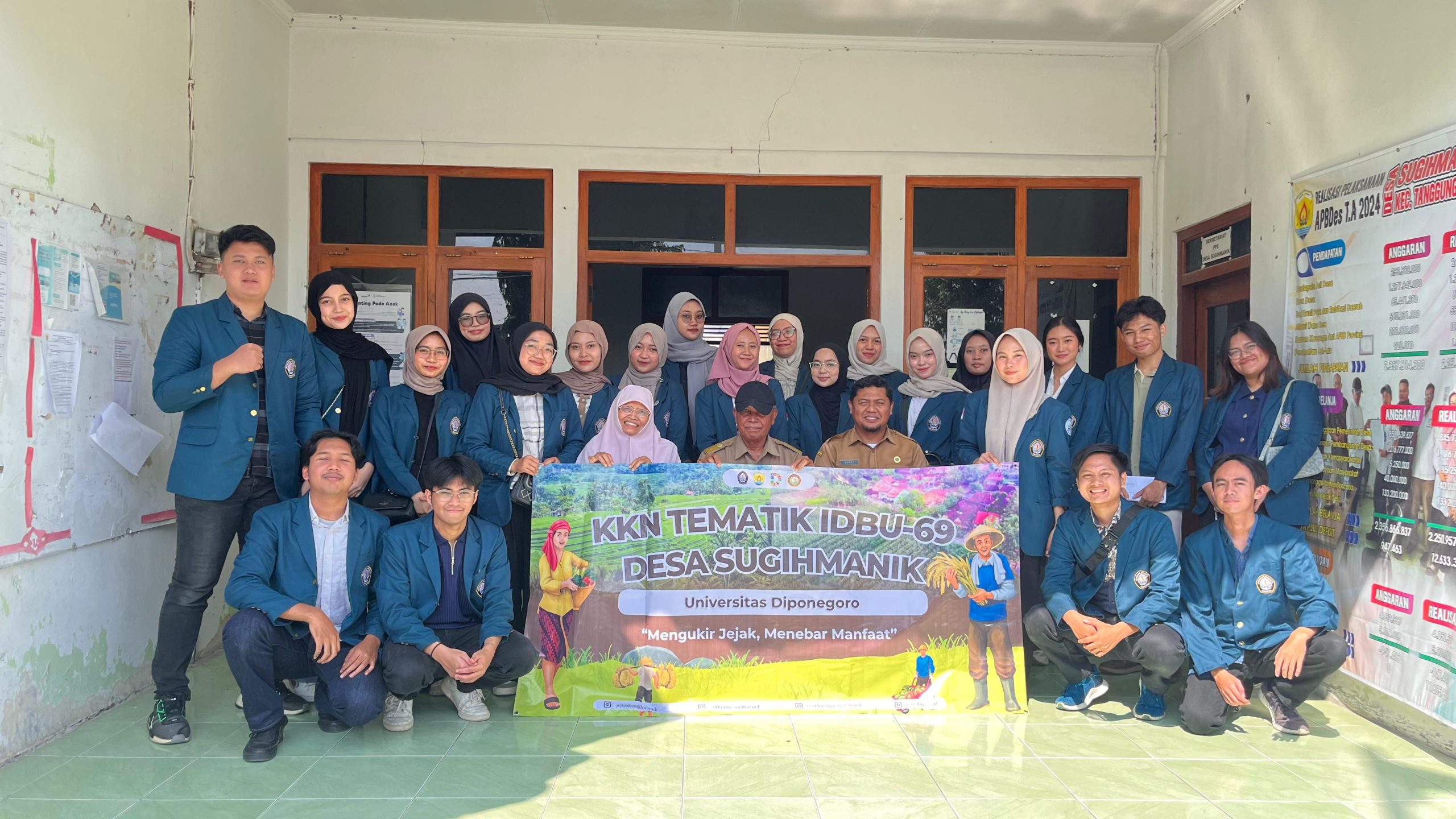
Sugihmanik Village, Tanggungharjo District, Grobogan Regency – Diponegoro University once again demonstrated its concern for issues affecting the community through its Community Service Program (KKN). This year, UNDIP deployed students from various study programs to conduct community service in Sugihmanik Village, Tanggungharjo District, Grobogan Regency. This KKN activity was chaired by Prof. Dr. Sri Hartini, S.T., M.T., who directly led the implementation of the program.
The main theme of this activity is “Waste Management for Food Security in Sugihmanik Village in Support of Sustainable Development Goals (SDGs)”. The KKN students are present to provide solutions to the problem of tofu production waste, which has been a crucial issue in the area, especially in Sendangmudal Hamlet. This program has received full support from the local community, the village government, and the Grobogan Regency Government.
The main focus of the first multidisciplinary work program was the Utilization of Tofu Waste as an Effort to Reduce Environmental Pollution. The activities carried out by the KKN students included the production of Liquid Organic Fertilizer (POC) from tofu waste, the compilation of a guidebook on environmentally friendly waste management, and the application of a simple circular economy concept at the household level. Not only that, the students also provided education on environmental issues and the negative impacts of waste, branding strategies for environmentally friendly products, and socialization on the prevention of contact dermatitis caused by tofu waste, along with hand washing practices as part of clean and healthy living behaviors.
The second program focused on Optimizing Tofu Waste through Sales Strategies and Sustainable Business Development. The activities carried out by KKN students included the production of tofu pulp chips as an innovative processed food product, education on business promotion strategies using formal and informal language, and the dissemination of information on ergonomic work postures to prevent occupational hazards. In addition, students also designed evacuation routes and assembly points as part of occupational safety and health (K3) efforts, provided training on social media marketing techniques, and educated the community on the impact of food waste and food waste management.
The students also carried out social programs involving local residents and the surrounding community, such as making organic and non-organic trash bins for household waste management, making eco-enzymes from kitchen waste for household needs, creating literacy trees and career trees as educational media for children and teenagers, and conducting group exercises with the elderly. Additionally, students participated in other programs, such as attending posyandu activities, community service, religious gatherings, and TPQ teaching in Sugihmanik Village.
This KKN activity not only aims to raise public awareness of the importance of waste management and food security, but also to strengthen collaboration between universities, government, and the community in realizing sustainable development. UNDIP KKN students hope that this spirit of service and empowerment will have a long-term impact on Sugihmanik Village and serve as an example of a program that can be implemented in other areas.